Kedarnath Travel Guide for Pilgrims and Tourists
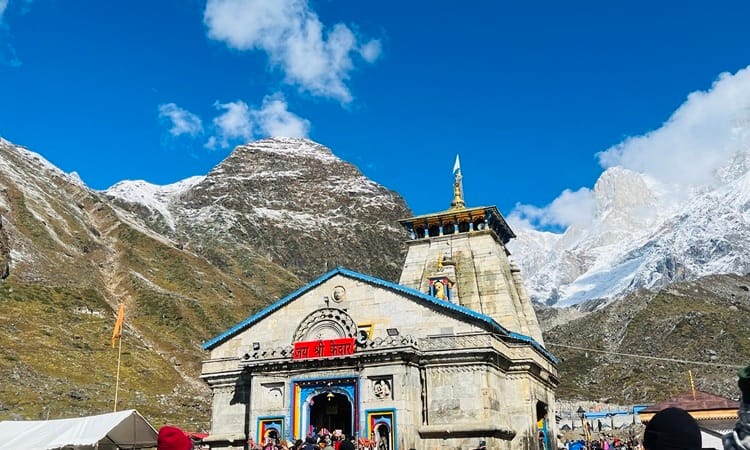
Kedarnath is not just a destination; it is a profound spiritual experience that leaves a lasting imprint on every pilgrim who visits. Located in the Rudraprayag district of Uttarakhand, Kedarnath is one of the most sacred Hindu pilgrimage sites and a key part of the Char Dham Yatra. Nestled in the majestic Garhwal Himalayas at an altitude of approximately 3,583 meters (11,755 feet), the town is home to the revered Kedarnath Temple, dedicated to Lord Shiva.
This guide provides a detailed, practical, and spiritually enriching travel plan to Kedarnath, designed especially for pilgrims, solo travelers, and families seeking a meaningful journey.
Kedarnath represents the spiritual depth of the Himalayas, while the spiritual city of Varanasi offers a different yet equally profound experience rooted in ancient traditions along the Ganges.
Spiritual Significance of Kedarnath
Kedarnath holds immense importance in Hinduism. It is one of the 12 Jyotirlingas of Lord Shiva, similar to the sacred Rameswaram Temple making it a highly sacred site for devotees. According to ancient scriptures, the Pandavas sought Lord Shiva’s blessings here after the Kurukshetra war. Shiva, unwilling to meet them, took the form of a bull and disappeared into the ground. The hump of the bull is believed to have appeared in Kedarnath, while other parts emerged at nearby locations, now worshipped as the Panch Kedar.
The spiritual atmosphere of Kedarnath is deeply moving. Surrounded by snow-clad peaks, flowing rivers, and absolute silence broken only by temple bells and chants, the place naturally encourages introspection and devotion.
For devotees interested in exploring major pilgrimage destinations across India, guides such as the Tirumala Tirupati temple travel guide offer useful insights alongside northern shrines like Kedarnath.
Best Time to Visit Kedarnath
Kedarnath Temple remains open only for a limited period each year due to extreme weather conditions.
Ideal Visiting Months
May to June: Pleasant weather, ideal for first-time pilgrims
September to October: Less crowded, clear skies, peaceful experience
Months to Avoid
- July to August: Heavy monsoon rains and landslide risks
- November to April: Temple remains closed due to snowfall
The temple generally opens in late April or early May and closes around Bhai Dooj after Diwali.
How to Reach Kedarnath
Step 1: Reach Haridwar / Rishikesh
Haridwar and Rishikesh are the main gateway cities.
- Well connected by rail and road
- Nearest airport: Jolly Grant Airport, Dehradun
Step 2: Travel to Sonprayag / Gaurikund
From Haridwar or Rishikesh, travel by road to Sonprayag or Gaurikund via Rudraprayag and Guptkashi.
Step 3: Trek from Gaurikund to Kedarnath
Trek distance: 16–18 km
Duration: 6–8 hours depending on fitness
Options available:
- Walking
- Pony or mule
- Doli (palanquin)
- Helicopter services (from Phata, Guptkashi, or Sersi)
The trek route is well-maintained and offers stunning views of waterfalls, valleys, and mountains.
Kedarnath Temple Darshan Experience
The Kedarnath Temple is built from massive stone slabs and stands strong against extreme Himalayan weather. Inside the sanctum, devotees worship the conical rock formation, believed to be one of the 12 Jyotirlingas of Lord Shiva.
types of darshan
- General Darshan: Free but involves waiting
- Special Puja / Abhishek: Requires advance booking
Morning and evening Aarti is especially powerful and spiritually uplifting.
Accommodation Options at Kedarnath
Accommodation in Kedarnath is simple and designed for pilgrims.
types of stay
- Government guest houses
- GMVN (Garhwal Mandal Vikas Nigam) lodges
- Budget hotels and dharamshalas
- Tents (during peak season)
For comfort, many pilgrims prefer staying at Guptkashi, Phata, or Sonprayag and traveling early to Kedarnath.
Food and Facilities
Food options in Kedarnath are limited but hygienic.
- Simple vegetarian meals
- Tea, snacks, and packaged food available
- No alcohol or non-vegetarian food permitted
Medical camps, police help desks, and emergency services are available during the yatra season.
Winter Closure and Ukhi Math Significance
Kedarnath Temple remains open only for about six months each year, usually from late April or early May until November. During the winter season, heavy snowfall makes the region inaccessible, and the temple is formally closed after a traditional ceremony. At this time, the Utsava Murti (ceremonial idol) of Lord Kedarnath is respectfully shifted to Ukhi Math, a sacred town in the Rudraprayag district of Uttarakhand. From November to April, daily rituals and prayers are conducted at the Omkareshwar Temple in Ukhi Math, allowing devotees to continue worship during the winter months. Because of this sacred tradition, Ukhi Math is regarded as the winter seat of Lord Kedarnath, holding deep spiritual importance for pilgrims.
A Visual Journey Through Kedarnath
The following photographs are original images captured during a personal visit to Kedarnath, showcasing the spiritual depth, ancient heritage, and dramatic Himalayan landscape of this sacred pilgrimage site. From the timeless stone architecture of the Kedarnath Temple to powerful symbols of faith and devotion, these images reflect the serene atmosphere and profound spiritual energy that pilgrims experience throughout the journey.
Together, they offer travelers a realistic visual insight into the pilgrimage experience, helping visitors understand the terrain, atmosphere, and sacred importance of Kedarnath before planning their journey.
Kedarnath Temple Main Structure
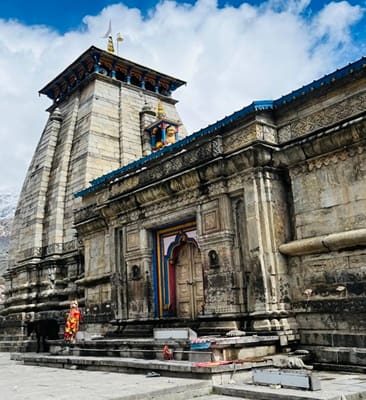
The sacred Kedarnath Temple stands majestically against the backdrop of the Garhwal Himalayas. Built from massive stone slabs, this ancient shrine is dedicated to Lord Shiva and is one of the twelve Jyotirlingas in India. Despite extreme weather conditions, the temple has remained a powerful symbol of faith, resilience, and spiritual devotion for centuries.
Bhim Shila near Kedarnath Temple
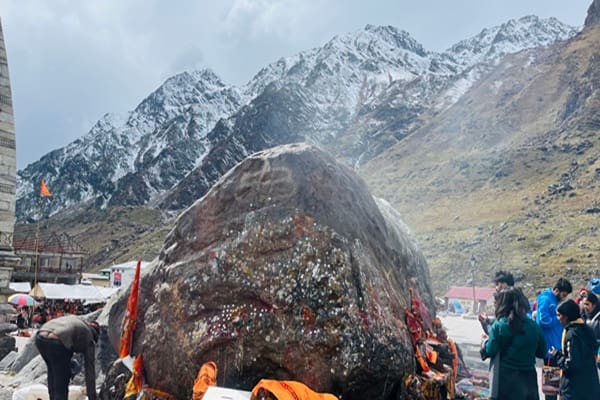
Bhim Shila is a massive rock located near the Kedarnath Temple and holds deep spiritual significance. During the devastating floods of 2013, this rock is believed to have diverted the flow of water, protecting the main temple structure. Today, devotees worship Bhim Shila as a symbol of divine protection and faith.
Om (ॐ) Sculpture in Kedarnath
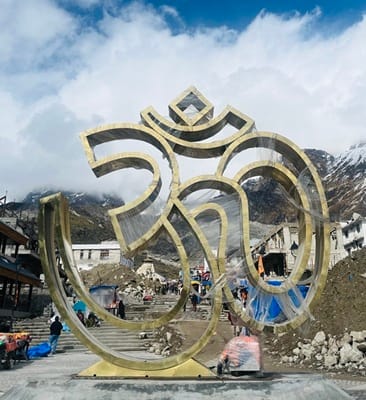
A large Om (ॐ) sculpture near Kedarnath reflects the deep spiritual energy of the region. Surrounded by towering mountains and serene surroundings, this sacred symbol represents cosmic consciousness and the presence of Lord Shiva, offering a peaceful space for meditation and reflection.
Kedarnath Temple Entrance with Bell
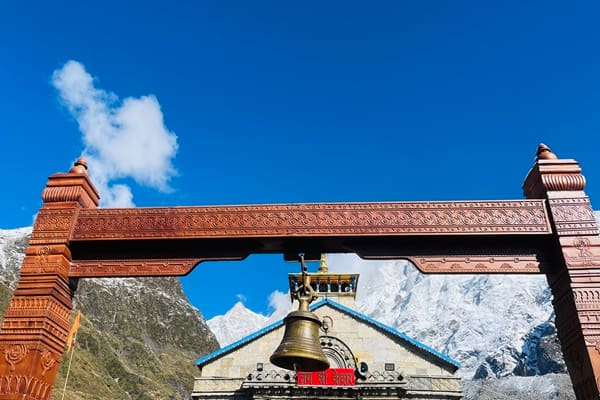
The grand entrance of Kedarnath Temple welcomes devotees with a sacred bell and stunning Himalayan views. Ringing the temple bell is considered an auspicious act, marking the beginning of a spiritual journey filled with devotion, humility, and inner peace.
Suggested 4-Days Kedarnath Travel Plan
Day 1: Haridwar / Rishikesh to Guptkashi
- Road journey through scenic Himalayan terrain
- Overnight stay at Guptkashi
Day 2: Guptkashi to Kedarnath
- Early morning travel to Gaurikund
- Trek or helicopter ride to Kedarnath
- Evening darshan and aarti
Day 3: Kedarnath Darshan and Return
- Morning abhishekam
- Explore surroundings
- Trek back to Gaurikund
- Stay at Sonprayag or Guptkashi
Day 4: Return to Haridwar / Rishikesh
- Visit nearby temples if time permits
Important Travel Tips
- Carry warm clothing even in summer
- Start trekking early to avoid weather changes
- Keep essential medicines
- Avoid overexertion due to high altitude
- Follow local administration guidelines
- Pre-register for Char Dham Yatra (mandatory)
Responsible and Spiritual Travel
- Kedarnath is an ecologically sensitive zone. Travelers should:
- Avoid plastic usage
- Respect local customs
- Maintain silence near the temple
- Avoid littering
A spiritual journey is not only about reaching the temple but also about maintaining humility and gratitude throughout the journey.
Conclusion
A visit to Kedarnath is a journey of faith, endurance, and inner transformation. The challenging trek, unpredictable weather, and simple living conditions test physical strength, but the spiritual reward is immeasurable. Whether you are a devout pilgrim or a traveller seeking peace and meaning, Kedarnath offers an experience that stays with you for a lifetime.
YatraVihari encourages travellers to approach Kedarnath not just as a destination, but as a sacred path that connects the human soul with divine consciousness.
Frequently Asked Questions About Kedarnath Travel
Where is Kedarnath located?
Kedarnath is located in Rudraprayag district of Uttarakhand, in the Garhwal Himalayas of India. The Kedarnath Temple stands at an altitude of about 3,583 meters (11,755 feet) near the Mandakini River and is surrounded by snow-covered peaks.
Why is Kedarnath famous?
Kedarnath is one of the 12 Jyotirlingas of Lord Shiva and is also a part of the Char Dham Yatra. It is revered for its spiritual significance, ancient stone temple, and breathtaking Himalayan scenery, attracting both pilgrims and nature lovers.
What is the best time to visit Kedarnath?
The best time to visit Kedarnath is May to June and September to October. During these months, the weather is relatively stable and the temple is open. July and August are risky due to heavy monsoon rains and landslides.
Is Kedarnath open throughout the year?
No. Kedarnath Temple is open only for about six months, usually from late April or early May to November. During winter, heavy snowfall makes the region inaccessible, and the deity is shifted to Ukhi Math.
Where is Lord Kedarnath worshipped during winter?
During winter, heavy snowfall makes Kedarnath inaccessible, so the temple is closed. At this time, the ceremonial idol of Lord Kedarnath is moved to Ukhi Math, a town in Uttarakhand. From November to April, daily prayers are performed at the Omkareshwar Temple in Ukhi Math, which is why it is known as the winter seat of Lord Kedarnath.
How long is the Kedarnath trek?
The trek from Gaurikund to Kedarnath is approximately 16–18 km one way. Depending on fitness and weather conditions, it usually takes 6 to 9 hours to complete.
Are ponies and palanquins available for the trek?
Yes. Ponies, mules, and palanquins (palkis) are available at Gaurikund for elderly pilgrims and those unable to trek. Rates are regulated by local authorities and vary each season.
Is helicopter service available to Kedarnath?
Yes. Helicopter services operate from Phata, Guptkashi, and Sersi during the yatra season. These services are weather-dependent and should be booked only through authorized operators.
Is Kedarnath suitable for senior citizens?
Kedarnath can be challenging for senior citizens due to high altitude and long trekking distance. However, with proper medical fitness, helicopter services, and sufficient rest, many senior devotees successfully complete the pilgrimage.
What type of weather should I expect in Kedarnath?
Even in summer, Kedarnath remains cold, with temperatures ranging from 5°C to 15°C. Nights are colder, and sudden rain or snowfall can occur. Warm clothing is essential throughout the year.
Is mobile network available in Kedarnath?
Mobile connectivity is limited and unreliable. BSNL and Jio may work in some areas, but internet speed is slow. Travelers should not depend heavily on mobile networks.
Is registration required for Kedarnath Yatra?
Yes. Online or offline registration is mandatory for all pilgrims. Registration helps authorities manage crowd control and ensure traveller safety during the yatra season.
Are medical facilities available during the yatra?
Yes. Medical camps and emergency health services are set up along the yatra route. However, pilgrims with heart, lung, or severe altitude-related conditions should consult a doctor before traveling.
- All Images Source for this post: Original photo captured by author during Kedarnath Yatra